
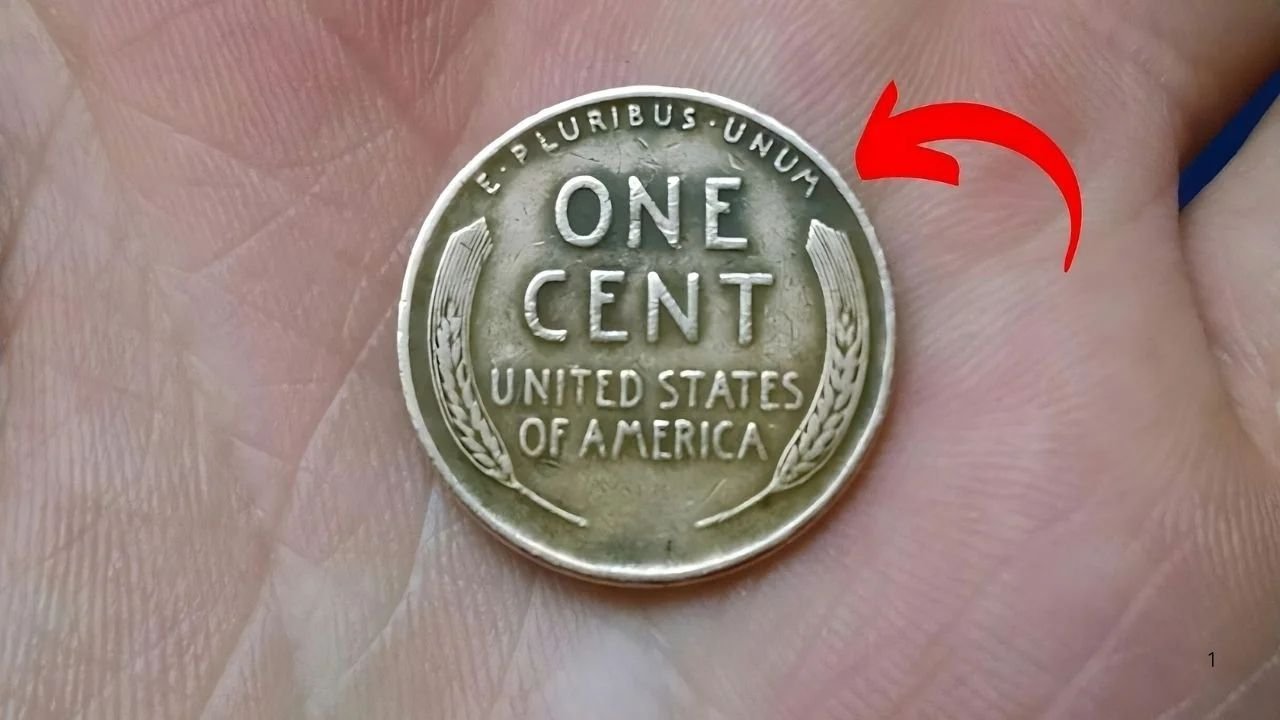
The Lincoln Wheat Penny has been a favorite among collectors for more than a century. From pocket change discoveries to million-dollar auctions, this humble coin has sparked excitement for generations. Recently, online rumors claim a Lincoln Wheat Penny is worth an incredible $11 million — and that it might still be in circulation. But is it true? Here’s the real story behind the famous coin and which Wheat Pennies are actually worth a fortune.
Why the Lincoln Wheat Penny Is So Iconic
Introduced in 1909, the Lincoln Wheat Penny was the first U.S. coin to feature a real historical figure. With Abraham Lincoln on the front and wheat stalks on the back, it quickly became one of the most collected coins in American history.
While most Wheat Pennies are worth just a few cents, certain rare dates, minting mistakes, and early versions can sell for hundreds of thousands — and in rare cases, over a million dollars.
Is There Really an $11 Million Wheat Penny?
There is no verified proof of a Lincoln Wheat Penny selling for $11 million. No auction house, collector database, or grading service has recorded such a sale.
So where did the rumor come from?
- Viral social media posts
- Misunderstood coin appraisals
- Confusion with other ultra-rare U.S. coins
- Exaggerated or click-bait claims
However, some Wheat Pennies have sold for over $1 million, which keeps the myth alive.
The Wheat Pennies Truly Worth Big Money
Here are the real high-value coins collectors hunt for:
1943 Copper Wheat Penny
Value: $100,000 to over $1.75 million
Why it’s rare: Almost all 1943 pennies were made of steel for WWII. A few copper versions were struck accidentally.
1909-S VDB Wheat Penny
Value: $700 to $100,000+
Designer Victor David Brenner’s initials “VDB” were removed after limited production, making early “S” mint coins extremely scarce.
1914-D Wheat Penny
Value: $500 to $40,000+
A low-mintage Denver issue that disappeared quickly from circulation.
1922 No D Wheat Penny
Value: $12,000 to $60,000+
A striking error where the Denver mintmark was completely missing.
1944 Steel Wheat Penny
Value: $50,000 to over $400,000
A rare error created when leftover steel planchets from 1943 were mistakenly used.
Could an $11 Million Wheat Penny Ever Exist?
Possibly — but only under one condition:
A new, previously unknown, one-of-a-kind error coin must be discovered.
In coin collecting, rarity + demand + perfect condition = massive value. So theoretically, a flawless, unique Wheat Penny could one day break records. But none have reached anywhere near $11 million so far.
Can Rare Wheat Pennies Still Be Found in Circulation?
Surprisingly, yes. Millions of Wheat Pennies still exist and turn up in:
- Coin rolls
- Old jars and piggy banks
- Antique stores
- Estate collections
- Garage sales
Finding a million-dollar coin is unlikely — but finding a Wheat Penny worth $50 to $500 is very possible.
How to Check if Your Wheat Penny Is Valuable
Look closely at:
- Date: Key years include 1909, 1914, 1922, 1943, and 1944
- Mintmark: D, S, or no mintmark
- Errors: Double dies, missing mintmarks, unusual metal
- Condition: Uncirculated coins are worth far more
If you suspect your penny is rare, consult:
- PCGS (Professional Coin Grading Service)
- NGC (Numismatic Guaranty Company)
Professional grading protects value and prevents counterfeits.
Final Thoughts
The idea of an $11 million Wheat Penny is exciting, but for now, it remains mostly an online myth. Still, many Wheat Pennies are extremely valuable — and some could be hiding in old jars or pocket change. Whether you’re a collector or just curious, checking your pennies could uncover a piece of history worth far more than one cent.
FAQ: Lincoln Wheat Penny Worth Millions
1. Is there a real Wheat Penny worth $11 million?
No. No authenticated sale has reached $11 million, though some rare Wheat Pennies exceed $1 million.
2. What is the most valuable Wheat Penny?
The 1943 Copper Wheat Penny, with some selling for over $1.7 million.
3. Can I still find Wheat Pennies today?
Yes. They occasionally appear in change, coin rolls, and old collections.
4. Which years are worth the most?
Key years: 1909-S VDB, 1914-D, 1922 No D, 1943 Copper, 1944 Steel.
5. How do I test if a 1943 penny is copper?
Use a magnet.
- Copper = does NOT stick
- Steel = sticks immediately
6. Should I get my penny graded?
Yes — grading confirms authenticity and increases market value.