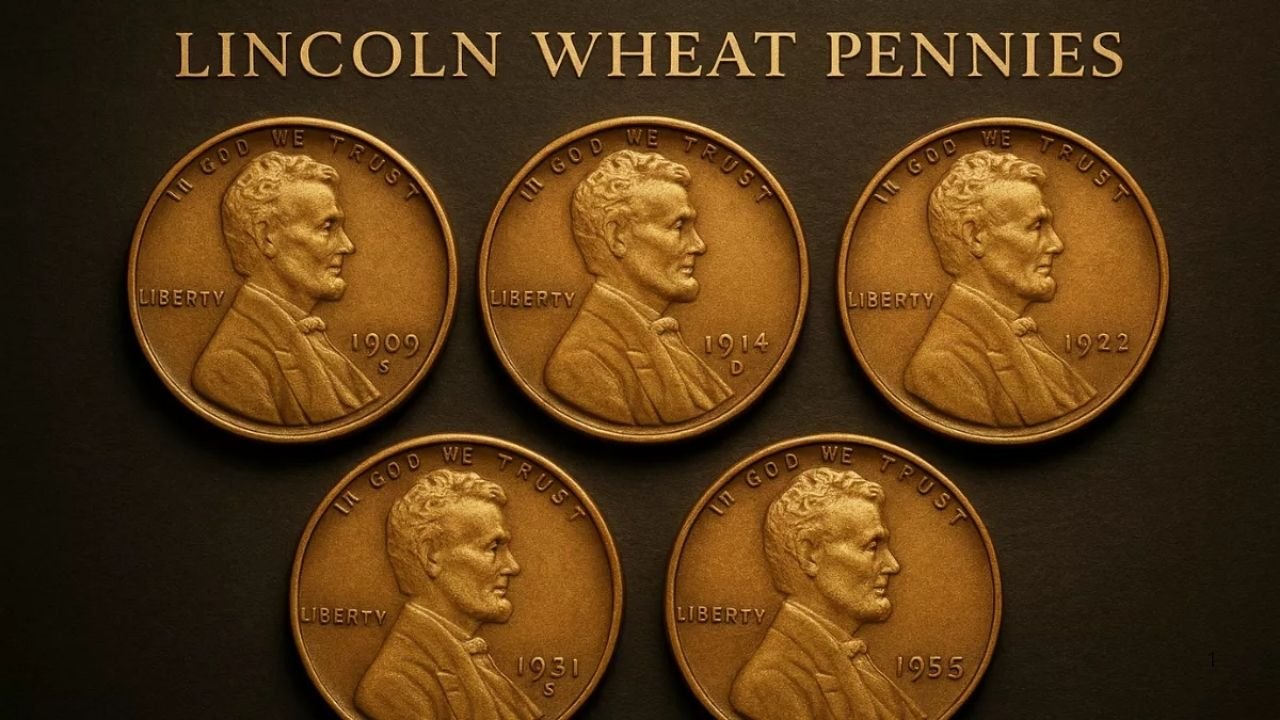
Lincoln Wheat Pennies, first issued in 1909, remain some of the most popular collectible coins in the United States. Featuring Abraham Lincoln on the front and wheat ears on the back, these pennies were minted until 1958. While most are common and worth just one cent, a few rare dates, special mint marks, and error coins can sell for hundreds or even thousands of dollars. Knowing what to look for can help turn old coin jars, rolls, or inherited collections into potential treasure troves.
Top 5 Lincoln Wheat Pennies to Watch
1. 1909-S VDB
- Mint: San Francisco
- Notable Feature: “VDB” initials for designer Victor David Brenner
- Why It’s Valuable: Only 484,000 coins were minted. Excellent-condition examples can fetch $100,000+, while worn coins still sell for thousands. As the first-year Lincoln cent, it’s highly sought after by collectors.
2. 1914-D
- Mint: Denver
- Notable Feature: Low mintage of ~1.2 million coins
- Why It’s Valuable: Scarce and historically important, high-quality examples range from $1,000 to $10,000.
3. 1922 No D
- Mint: Denver
- Notable Feature: Missing “D” mint mark (minting error)
- Why It’s Valuable: Rare error with some coins selling up to $20,000 in top condition. Careful inspection is required to spot this subtle mistake.
4. 1931-S
- Mint: San Francisco
- Notable Feature: Depression-era low production
- Why It’s Valuable: With only 866,000 minted, coins in excellent condition can reach several thousand dollars. Its historical context adds collector appeal.
5. 1955 Doubled Die
- Mint: Philadelphia (no mint mark)
- Notable Feature: Dramatic doubled date and lettering on the obverse
- Why It’s Valuable: Eye-catching error makes it one of the most popular Wheat Pennies. Even circulated examples can sell for hundreds, while pristine coins exceed $10,000.
| Year | Mint Mark | Feature | Value (USD) |
|---|---|---|---|
| 1909 | S | VDB initials | $2,000 – $100,000+ |
| 1914 | D | Low mintage | $1,000 – $10,000 |
| 1922 | No D | Missing mint mark | $1,500 – $20,000 |
| 1931 | S | Depression-era scarcity | $500 – $5,000+ |
| 1955 | None | Doubled die error | $300 – $10,000+ |
How to Identify a Valuable Wheat Penny
- Check the date and mint mark: Key for determining rarity.
- Inspect for errors: Look for missing mint marks, doubled designs, or unusual details.
- Examine condition: Coins with minimal wear and strong details are worth far more.
- Avoid cleaning: Scrubbing or polishing reduces collector value.
- Consider professional grading: Certified coins ensure authenticity and market price accuracy.
Why Condition Matters
Even small scratches, fading, or wear can significantly impact value. Coins are graded on a 1–70 scale, with higher numbers indicating better preservation. Top-grade Wheat Pennies often come in protective holders to maintain condition and long-term worth.
FAQs
Q1: What makes a Lincoln Wheat Penny valuable?
Rarity, low mintage, minting errors, and condition are the main factors.
Q2: Are all 1909 pennies valuable?
No. Only certain types, like the 1909-S VDB or high-quality coins, hold significant value.
Q3: How can I tell if my penny is a 1922 No D?
Look closely at the obverse; if the “D” mint mark is missing, it may be the rare No D version.
Q4: What is a doubled die penny?
A coin with doubled images caused by a minting error, making it collectible.
Q5: Can circulated pennies still be valuable?
Yes. Rare dates and error coins can be worth thousands even if they show wear.
Conclusion
While most Lincoln Wheat Pennies are common, a few rare dates, mint marks, and error coins are highly collectible and can fetch thousands of dollars. Whether found in a coin jar, inherited collection, or old rolls, knowing what to look for can turn a simple penny into a valuable treasure. These five examples highlight how history, rarity, and condition combine to create some of the most exciting coins for collectors in 2025.